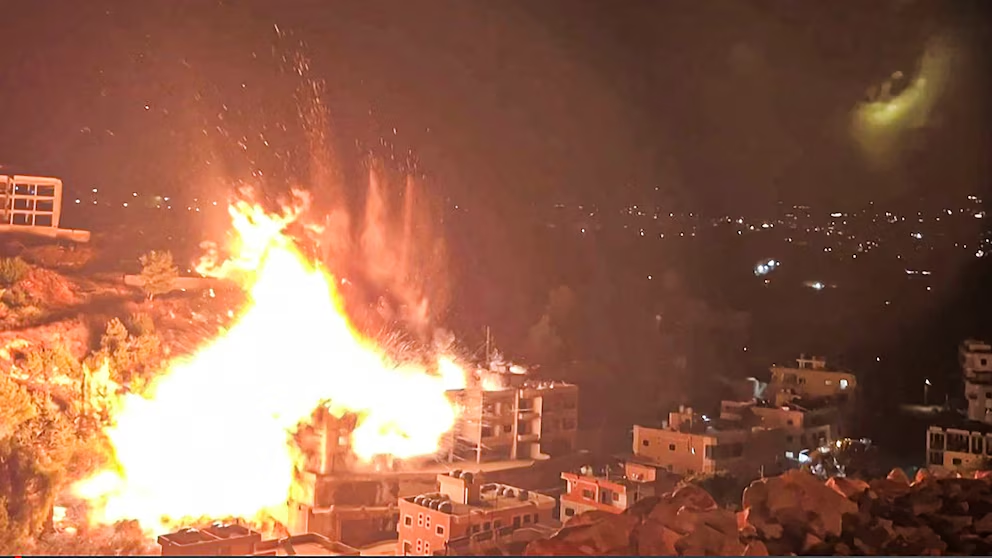

Current Affairs: Political Landscape in Lebanon
Lebanon remains a focal point of significant political activity, particularly as the nation grapples with enduring challenges compounded by recent events. The political landscape in Lebanon has been marked by governmental decisions that resonate deeply within its diverse populace. One of the key developments is the ongoing negotiations regarding economic reforms, which have been a pressing demand from both the public and international community. The Lebanese government is under considerable pressure to address the economic crisis, a situation exacerbated by years of political stagnation and corruption.
In recent weeks, Lebanon has witnessed a series of protests and public demonstrations, reflecting widespread dissatisfaction with current leadership and policy implementations. This unrest underscores the public’s demand for transparency and accountability from political figures. As various factions vie for control and influence, the political dialogue in Lebanon often becomes polarized, contributing to the instability that characterizes the nation’s governance.
Moreover, significant changes in leadership have emerged, particularly with the appointment of new ministers responsible for vital sectors. These shifts are viewed as an opportunity for rejuvenation; however, they must navigate a complex web of historical grievances and current expectations from the Lebanese people. The implications of these leadership changes on governance and accountability will likely dominate discussions in the coming months, influencing not only political stakeholders but also Lebanon’s relations with international partners.
The enhancement of Lebanon’s political climate is precariously linked to these ongoing developments. As the nation contends with both internal dynamics and external pressures, the unfolding of current affairs will undoubtedly play a pivotal role in shaping the future of Lebanon. Observers of Lebanon news should remain attentive to how these factors unfold, given their potential to impact both domestic and international perceptions of this resilient yet tumultuous nation.
Economic Update: Trends and Challenges
The economic landscape in Lebanon is characterized by significant challenges against a backdrop of persistent inflation, fluctuating employment figures, and the ramifications of international sanctions. Recent reports indicate that the inflation rate remains alarmingly high, impacting the purchasing power of citizens and making basic goods increasingly unaffordable. According to various Lebanon news outlets, the rising cost of living is becoming a pressing concern for many households, exacerbating the already delicate socio-economic fabric of the nation.
Employment statistics reveal a troubling trend, as a large segment of the population faces job scarcity. The informal labor market has seen substantial growth, reflecting both a lack of formal opportunities and the desperation of individuals seeking to sustain their families. Policymakers are challenged to find effective solutions to stimulate job creation in the formal economy while addressing the needs of those working in unregulated sectors.
Furthermore, the impact of international sanctions is palpable, as they have restricted access to critical financial resources and development assistance. These sanctions constitute a significant barrier to economic recovery, complicating the efforts of the government to implement necessary reforms. Many analysts are urging the Lebanese authorities to engage in dialogue to lift these sanctions while simultaneously enacting internal reforms aimed at restoring confidence among international investors.
In light of these economic challenges, discussions surrounding potential solutions are ongoing. Initiatives to diversify the economy, enhance the export sector, and foster entrepreneurship are being explored as means to combat the prevailing economic malaise. The role of international partnerships and investment remains crucial in this respect, as the Lebanese economy looks for pathways to resuscitation against a backdrop of uncertainty. As Lebanon news continues to cover these developments, the focus remains on resilience and adaptability in facing economic hardships.
Social Issues: A Spotlight on Daily Life
The socio-economic landscape in Lebanon has become increasingly complex, reflected in the struggles faced by its citizens. Health care remains a critical issue, with many hospitals and clinics grappling with inadequate funding, leading to shortages of medical supplies and personnel. Citizens often have to navigate a fragmented health system where access to care is heavily influenced by socio-economic status. The Lebanese population, particularly in underprivileged areas, faces significant barriers in obtaining essential medical services due to rising costs and declining infrastructure.
Education is another area of concern, especially as Lebanon experiences a brain drain exacerbated by the ongoing economic crisis. Schools are struggling to maintain quality of education amid funding shortages and teacher strikes. As a result, many families find it challenging to provide their children with continuity in learning, leading to a demographic that may be ill-equipped for future challenges. The growing disparity between the quality of education in urban centers and rural areas is also contributing to social inequality, making it imperative for grassroots initiatives to step in.
Social justice movements are emerging as a powerful response to these systemic challenges. Community organizations and youth-led groups are actively advocating for reforms in health care and education policies, raising awareness around social issues such as gender equality, discrimination, and environmental justice. These movements aim not only to address immediate concerns but also to foster a more equitable society in the long term. In response to the prevailing crises, individuals and communities are coming together to support each other, forming networks that empower the Lebanese population amid adversity.
Cultural Insights: Resilience Through Art and Heritage
Lebanon boasts a vibrant cultural scene that serves as a testament to its people’s resilience in the face of adversity. The ongoing turmoil the nation has experienced has significantly influenced its artists, musicians, and cultural institutions, prompting them to find new ways to express their identity and preserve their heritage. In the context of Lebanon news, many stories highlight how cultural expressions are not merely aesthetic pursuits but powerful vessels for resistance and continuity.
Artists in Lebanon have responded to the political and social challenges by incorporating themes of struggle and hope into their work. For instance, visual artists often address contemporary issues such as migration, identity, and societal division through their mediums. Street art has emerged as a significant form of expression, with murals depicting powerful messages that resonate with communities grappling with change. This artistic response provides not only a voice to the oppressed but also creates a sense of communal solidarity, rooting social discourse in the shared experience of struggle.
Moreover, musicians are adapting to the evolving landscape of Lebanon, using their art to foster unity among diverse cultural groups. Traditional Lebanese music is often intertwined with contemporary influences, enabling artists to bridge generational gaps while remaining relevant. Music festivals and live performances, sometimes organized despite overwhelming challenges, become symbolic gatherings, celebrating unity amidst diversity. Cultural institutions, too, play a critical role in promoting the arts, organizing exhibitions, and supporting emerging talents, thereby ensuring that Lebanon’s rich artistic heritage continues to thrive.
Ultimately, the cultural landscape in Lebanon acts as a beacon of hope, illustrating how creativity can flourish even under dire circumstances. By embracing their heritage and engaging with today’s pressing issues, Lebanese artists and cultural institutions contribute significantly to the resilience narrative prevalent in current Lebanon news.